June 17, 2025
Marketing in the Age of AI: Human Creativity vs. Machine Efficiency
Public Relations - GU

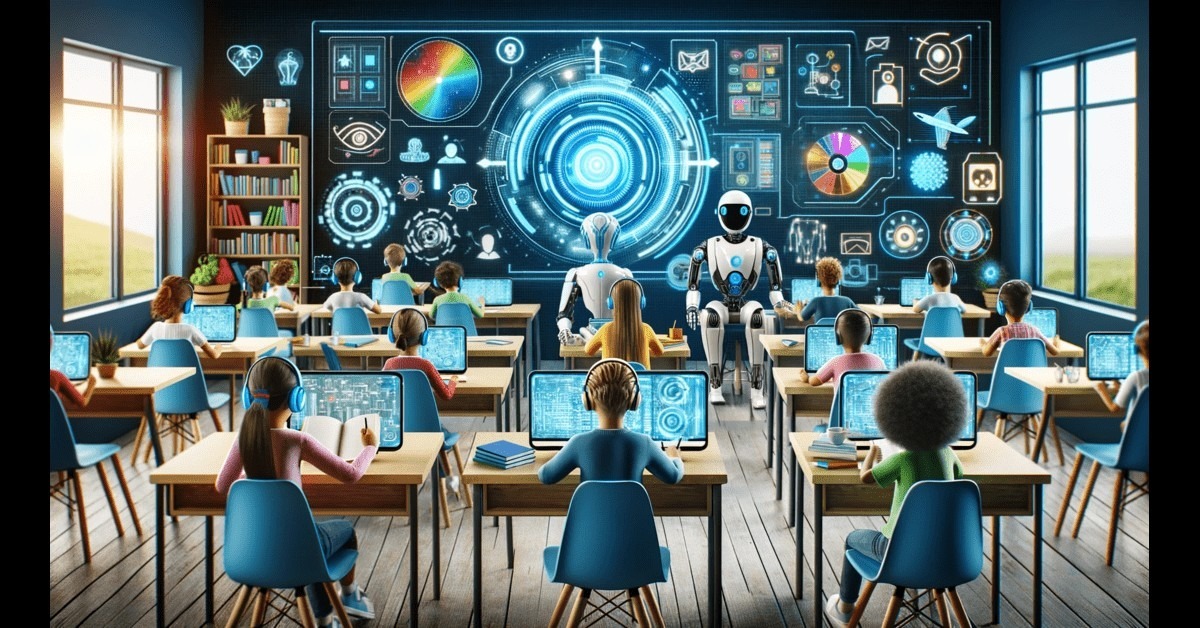
From Sketch to Simulation: How AI is Transforming Design Learning. Design education is undergoing a fundamental shift powered by artificial intelligence.
Design education traditionally combines creativity with technical precision. Students progress from initial sketches to refined models using manual techniques—a process requiring years to master. Artificial intelligence now introduces transformative capabilities, offering new tools for ideation, simulation, and learning personalization that reshape how design is taught and practiced.
The challenge of translating mental concepts into visual form receives substantial support through AI technologies. Text-to-image generators enable rapid visualization of design concepts. For example, describing "a recreation area with developed trees, paved walkways, minimalist sculptures, and meditation zones" can be instantly rendered as multiple visual options. This capability encourages experimental thinking and accelerates the traditional prototyping process, removing barriers that typically overwhelm learners during early design phases.
Beyond idea generation, AI functions as an optimization tool throughout design development. Generative design algorithms propose solutions based on specified constraints. A student designing a lightweight drone, for instance, can input parameters like weight, materials, and load capacity. The AI then optimizes within these parameters, ensuring technical viability alongside aesthetic consideration. This approach mirrors industry practices while helping learners balance functionality with creative vision.
AI-powered simulation tools now democratize testing capabilities that traditionally required specialized equipment. Students can receive immediate structural analysis, stress predictions, and real-time feedback enabling rapid iteration.
Testing traditionally required specialized equipment and expertise. AI-powered simulation tools now democratize this capability. A student designing furniture can receive immediate structural analysis, stress predictions at critical points, and real-time feedback enabling rapid iteration. Virtual testing eliminates physical prototype requirements while providing essential validation before manufacturing.
AI systems adapt to individual learner capabilities and learning styles. The technology identifies knowledge gaps—such as 3D modeling weaknesses—and recommends targeted instruction. This personalization addresses diverse learning approaches, creating customized educational experiences rather than one-size-fits-all instruction.
Integration with VR and AR technologies will enable immersive design exploration. AI will increasingly support sustainable design practices, helping students assess environmental impacts and select responsible materials and processes, fostering ethically conscious design approaches. The convergence of these technologies promises to create design education environments that are more engaging, more personalized, and more connected to real-world practice than ever before.
Dr. Aseel Abdulsalam Al Ayash
College of Engineering, Gulf University